 Let’s get straight to the punch line for this post: With Reiki, as with life, there are no guarantees. I wish there were, but there are not.
I’m writing this because as a Reiki Master I often have the following exchange with potential clients.
Client: “Will Reiki help with my . . . [fill in any physical or mental health ailment]?”
Janice: “Reiki will provide a state of deep relaxation where your body, mind, and spirit can reach their full potential for healing.”
Client: “Is there a guarantee this will heal me?”
Janice: “There are no guarantees. However, it will help you achieve a state of deep relaxation where your highest healing good can be achieved. When we’re relaxed our body heals faster, our minds are clearer and more creative, and we can relate with each other more authentically.”
Client: “What percentage chance is there that Reiki will heal my . . . “
Janice: “Reiki is a healing practice. I don’t have a number to quantify it.”
Client: “I’ll try something else with a guarantee.”
What is the something else with a guarantee? Does the medication you take come with a guarantee that it will heal you? Do you know how it heals you? Is it possible that it is your mind and your body’s natural abilities that are healing you?
Dr. Andrew Weil’s book, “Spontaneous Healing,” addresses this exact phenomena where a patient’s body is healed without conventional medicine’s intervention, even in the case of severe and prolonged illness. He writes:
“I regard the placebo response as a pure example of healing elicited by the mind; far from being a nuisance, it is, potentially, the greatest therapeutic ally doctors can find in their efforts to mitigate disease . . . Unfortunately, this view of placebo medicine is very much out of fashion today. . . . If a drug begins to work in too many different conditions, most doctors lose interest in it, because they think lack of specificity means lack of an underlying mechanism. In other words the drug could be — perish the thought! — merely a placebo.”
So, Reiki . . . maybe it’s a placebo, maybe its effectiveness really is all in your mind, and, definitely, there are no guarantees that it will work. Why, then, should you spend your time and money on a Reiki treatment? Here are a few compelling anecdotes:
- A seven-year-old girl fractured her humerus and required surgery to insert three pins. The post-surgery recovery time was slated at 6-weeks, minimum. The girl received daily Reiki treatments and recovered in half that time – 3 weeks.
- A 45-year-old man had knee surgery. He asked his wife, a level 2 Reiki practitioner, for treatments on his knee. At his 6-week follow-up visit the orthopedic surgeon was shocked by the speed of his healing. He called in his colleague to show him the progress of healing and recovery that the man had achieved which was what they normally see at 12 weeks or more post-operatively in people 10-15 years younger than the man.
- A 60-year-old woman, grieving the death of her husband and living with the side effects of chemotherapy treatment for her breast cancer, received a Reiki session once a week for six weeks. After two treatments she reported an improvement in the quality of her sleep and increased energy. After three treatments she reported that the neuropathy in her hands and feet had stopped. After six treatments, she said, “I have my life back.”
Won’t you give Reiki a try? Yes, there are no guarantees, but there is a good chance you’ll feel great and facilitate your body’s natural healing abilities.
Wishing you abundant wellness!
 “Time rules over us without mercy. Not caring if we’re healthy or ill. Hungry or drunk. Russian, American, beings from Mars. . . . we live or we die by the clock. We never turn our back on it and we never ever allow ourselves the sin of losing track of time.” from
 In every Reiki class that I teach, I say, “We [Reiki Practitioners] don’t diagnose.” It’s an important directive to keep in mind because when we practice Reiki we often notice things about a client’s physical or emotional state. For instance, we may notice that a lot of energy is drawn in at the crown of the head, or that very little energy seems to be drawn in at the stomach, or that the breath deepened when our hands were in the heart region, or that the client was holding a lot of anger or grief inside. Also, a client may ask us at the end of a Reiki session, “What did you notice?” There is a temptation to draw conclusions and make recommendations based on what we sensed and our experience as practitioners. However, it is important not to diagnose for three reasons.
 As a Reiki Master Teacher, I’ve noticed that people take Reiki Classes for a wide-variety of reasons. Some people are seeking an addition to their professional practice as a physician, nurse, or therapist. Others are looking for a self-care practice to manage their stress and promote their healthy lifestyle; while some people are inexplicably drawn to the class. They are not sure of the reason that they are there but they are certain it is the right thing to do.
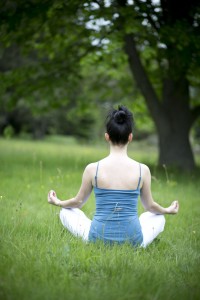 Ah, to be at peace, to be centered, calm, and focused. Reiki is like the moment during meditation where you are completely at peace, balanced, and free. Though, most people find Reiki to be much easier than meditation. Perhaps that is why it’s receiving so much attention recently.