

Indeed it was a treat to be with Kara Jones of the Creative Grief Studio and other grief support professionals in Pittsburgh, PA on April 23rd. What a great day of delving into our self-care, looking for ways to carry this forward, and finding intersections with our self-care and professional lives.
It has been a long time since I’ve been on a retreat and this one worked for me because of its proximity to home and family. My only regret was how brief it was. (Kara mentioned plans for a longer duration retreat for next year!) If you have the opportunity to go on a retreat, I highly recommend that you go for as long as your budget and schedule will allow. In my experience, it’s rare to get to the end of a retreat (even 7 day ones that I’ve attended) and think, “Gee, I wish that had ended 2 days ago.”
Kara was very skillful in her guided visualizations, bringing the group together for sharing and support, and helping us find the pieces in our insights that we’d like to carry forward. This is really an essential part of a successful retreat: “What are you going to bring forward from this experience into your day-to-day life?”
The first time I went to Kripalu for a yoga and meditation retreat I was filled with the positive vibes of the experience, but the re-entry into my normal life quickly erased it. I was left swooning with the after-effects and unable to grasp onto what I had learned and how I would apply it in my “real” life. (Other experiences at Kripalu have been different and more focused on how you bring the retreat experience and insights forward.)
A few things that I plan to bring forward from this reTREAT are to find places where I’m seen and heard – where each day I can be myself and tend to myself. This tending to ourselves is such a vital aspect of life. This is one of the things I hope I can do for myself and others (and I hope you can too). Let’s give ourselves and others accolades for self-care. We spend a lot of time patting each other on the back for taking care of others – and this is a wonderful thing — but let’s also pat them on the back for taking care of themselves. Because if they don’t take care of themselves, how will they take care of others?
Wishing for you many wonderful retreat experiences with action-oriented insights for your daily life.
 Let’s shatter some myths here. There is no state of ongoing fearlessness or endless energy. One may experience moments of fearlessness or heightened bravery. And one may experience days of bountiful energy. However, these are not states that are fixed (or static) in our human experience.
 It’s March. Remember the glow of the New Year that we felt in January? Perhaps you’re also remembering a resolution or two that you set. How are those resolutions going? If some of them were around establishing a new habit – maybe it was related to exercise or healthy eating or meditating more often – it takes awhile for a new habit to take root. (In the popular self-help culture, people usually state that it takes 21 or 28 days to create a new habit.)
 You might recall that
  Imagine you’re at home, seated on your sofa or your favorite chair. The house is quiet and you’re feeling really pleased with yourself for taking this time in your day for meditation. You close your eyes, focus your mind, try to find your breath, and then . . . nothing, or a lot of something. A lot of noticing that pain in your knee and the crookedness of your back. Or you can’t stop trying to solve that nagging problem with your computer. Your mind keeps asking, “Why won’t it print?!” Then you remember, “Oh, I’m supposed to be meditating. How am I supposed to do this?”
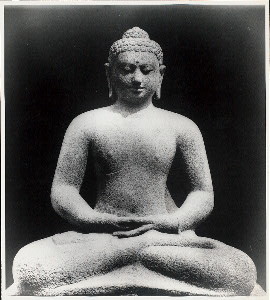 Many people wonder, why should I meditate? What are the benefits? To me, the short answer is: “Because it works.” Then, of course, the next questions are: “How does it work? How will it help?” Simply put, meditation works by increasing awareness. To be mindful is to be aware of one’s experiences, both internal and external experiences. Mindfulness-based meditation helps one to become aware. By being aware, we are able to make better decisions, manage our mood, and activate more parts of our brain.
 Sometimes I wake up at 3:30 a.m. and can’t fall back to sleep. Does this type of insomnia ever happen to you? Is it a crisis for you? Do you lie in bed waiting for the alarm to go off or the sun to come up? Are your first thoughts? “I’m awake already??!! This is going to ruin my day.”