
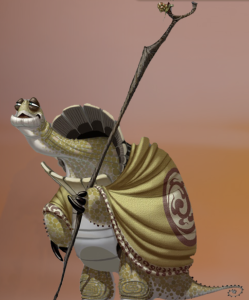
When I studied Reiki at Kripalu Center for Yoga and Health in Stockbridge, Massachusetts, my teachers, Libby and Maggie, offered a class called, “The Art of Reiki,” which followed my Reiki 2 class. It did not include any additional Reiki attunements or initiations, but was a class about how we live our lives from a place of love and light. It delved into how we care for ourselves and bring our best selves to the art of helping others. During the class, Libby and Maggie expertly guided and reminded us of the teachings of Reiki 1 and 2 — including, that we offer Reiki and it is not a manipulation of another person’s energy.
To work from a place of offering takes a certain management of the ego. It reminds me of the art of wu wei, which was described in a 2014 New York Times article. The article refers to some ancient texts that state, “If you try to be filial, this not true filiality; if you try to be obedient, this is not true obedience. You cannot try, but you also cannot not try.”
In true Taoist cryptic fashion, the texts implore one to the act of non-doing. This contradictory direction can seem very puzzling, but it also has an incredible power. During my first yoga workshop, Todd Norian encouraged us to achieve a state of effortless effort, which for me is similar (though not the same) as wu wei. When we’re in this state we are in flow (or in unison) with ourselves and the universe. It requires one to be able to quiet the mind and fully experience the moment as it is with as much non-judgmental awareness as possible.
As Reiki practitioners how do we practice the art of Reiki and wu wei? The first important step is to remember our role of offering Reiki. We are not the healers. The Reiki and the recipient do the healing. We are only facilitators, who are here to witness the present moment with our clients. For many practitioners, this leaves them with a feeling of not doing something and leads to questions such as, “What am I doing during Reiki?” and “How do I know I’ve offered it?” and “What if I don’t . . . feel the energy/see rainbows/envision chakras/speak with angels?”
None of that is necessary. What is necessary is the offering. What is necessary is a wu wei approach to allow healing to happen at the highest level.
How do you cultivate the art of Reiki and wu wei in your practice? Please share your experience in the comments below.
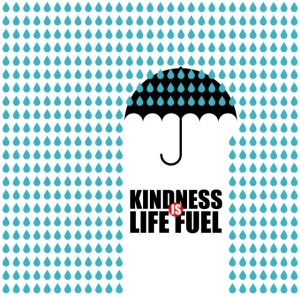 Has anyone ever said to you, “You’re too nice.”? People have said that to me and I’m always puzzled by their statement. What does it mean to be too nice? Is this even possible? As I’ve reflected upon this I see that there are times when I am too nice. When I put other people’s needs ahead of mine. When I don’t play by the rules of the game but rather by my rules for kindness. These both might be instances of being too nice.

 met me in the waiting room and asked how things were going during those first few weeks of classes and settling back into the routine of college life. I don’t recall what I said to her, but I do remember very clearly what she said to me, “Do you know how many times you just said, ‘should’?” I was startled by her question, but startled in a good way. I left the counseling center a lot calmer, quieter and reflecting on how many times I say, “should.”
 I’m startled sometimes by the harsh words that people use when talking about themselves. These are people who I know would not speak that way to another person, but they feel completely comfortable using words of disgust, hatred, and criticism towards themselves. When speaking of another person they often find a good side to that person’s personality or behavior, but when they speak of themselves extreme criticism is the norm.
 children of my students and level 2 Reiki practitioners, so they have all experienced this healing energy from their Mother’s gentle cuddles, hands on an injured leg, or a reassuring hand on the back before sleeping.