
 Awhile ago, I was leading a meditation group. At the beginning of the session, I asked the participants why they wanted to learn to meditate. There were the typical answers of seeking improved concentration, peacefulness, and mindfulness; however, there was one woman who said she wanted to learn to sit still. She described how sitting still is a real challenge for her. Working in finance, she is expected to sit for many hours a day, which is really difficult for her. Her colleagues often comment upon her fidgetiness.
As we got to know each other more, I learned that this bright young woman was a creative powerhouse. She could innovate at home and at work almost constantly and was sought out by all who knew her for her keen problem solving skills. Things did not linger on her to do list as she was on-the-go throughout the day making things happen.
Our sitting sessions were difficult for her and so I modified them to a walking meditation practice that allowed her to meditate in motion. She savored coordinating breath with movement and was able to focus her mind on that singular place of breath and step.
Even with that success, however, she still longed to sit still. She said to me, “Will I be able to do sitting meditation next?” And I replied, “You’re training your mind and will be able to translate that into sitting.” But then I hesitated because I wanted to point something out to her and so I ventured, “What if not sitting still is your superpower?” She looked at me puzzled, and I said, “Think about it for awhile and let me know next week how that might change things for you.”
She returned to our meditation sessions regularly and we continued our discussions on reframing her view of her hyperactivity. She noticed that by not resisting her physical energy but rather by accepting it and harnessing it she had greater peacefulness and mindfulness.
When she felt fidgety at work, she would go for a short walk. She also moved to a standing desk and eventually a treadmill desk. Then she started to explore the possibility of a career as a personal trainer — an area she had always loved. And eventually, she was able to sit for short periods of time during meditation.
This experience made me think:
What if we looked at the things that people sometimes don’t understand about us and harness them as our superpowers? Rather than resisting them, we make them into an asset.
For instance, perhaps people tell you that you’re thin-skinned. Instead of trying to be a tough and callous individual, you accept your sensitivity and use it to relate deeply to others. You create appropriate boundaries to protect yourself and yet are able to guide those in your life with your insightfulness.
What is your superpower? I encourage you to identify it and nurture it. May it grow and help you bring a shining light to this world.
 I knew I was in real trouble when I was at the dentist this month for a cleaning and check-up and I was giddy about the prospect of having my feet up and being able to close my eyes for 40 minutes in the middle of my day. Sure, there was someone poking around with a metal object at my teeth and gums, but, hey, if you can get to your relaxed state (thanks Reiki/yoga/meditation), then it’s an excellent spa moment.
 The ground shifted underneath me. November 2016 was a month of grief and shock for me. The loss of the election by way of the Electoral College to a man who brings darkness and hatred with his words and actions shook me to the core. Then, on the Tuesday before Thanksgiving, one of my colleagues took his own life in our office suite. I’m still reeling from it all.
 Several years ago I was traveling on business from Los Angeles to Tucson. I had a flight to catch from LA and was getting ready to leave my company’s office in the afternoon, drive to LAX, return the rental car, and fly out. One of the managers on my team was encouraging me to leave so I could make it there on time and get ahead of the afternoon rush hour traffic. I told her I was getting ready and would leave soon. She looked at me incredulously and said, “You’re not worried, are you?” To which I replied, “Worry, don’t worry. The outcome is the same.”
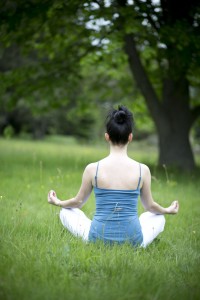 Imagine you’re at home, seated on your sofa or your favorite chair. The house is quiet and you’re feeling really pleased with yourself for taking this time in your day for meditation. You close your eyes, focus your mind, try to find your breath, and then . . . nothing, or a lot of something. A lot of noticing that pain in your knee and the crookedness of your back. Or you can’t stop trying to solve that nagging problem with your computer. Your mind keeps asking, “Why won’t it print?!” Then you remember, “Oh, I’m supposed to be meditating. How am I supposed to do this?”
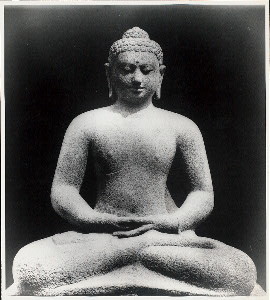 Many people wonder, why should I meditate? What are the benefits? To me, the short answer is: “Because it works.” Then, of course, the next questions are: “How does it work? How will it help?” Simply put, meditation works by increasing awareness. To be mindful is to be aware of one’s experiences, both internal and external experiences. Mindfulness-based meditation helps one to become aware. By being aware, we are able to make better decisions, manage our mood, and activate more parts of our brain.
